Welcome to a space where psychology meets compassion and growth. Each month, I'll share practical wisdom drawn from Acceptance and Commitment Therapy to help you navigate life's challenges with greater psychological flexibility and purpose.
What you'll receive:
Evidence-based strategies to build resilience and foster wellbeing
Thoughtful reflections on mindfulness and present-moment awareness
Practical tools to help you connect with your values and create a rich, meaningful life
Updates on workshops, speaking events, and new resources
Whether you're a mental health professional, a parent supporting a young person, or someone on your own journey of growth, this newsletter offers a gentle guide to living fully with both the joy and the struggle that life brings.
Together, we'll explore how to create space for difficult thoughts and feelings while moving toward what matters most to you.
This is part three of my newsletter on using values to help us live according to what matters most.
To revisit the key steps for part 1 and 2:
Key steps Part 1 - Click here to read part one
Key steps Part 2 - Click here to read part two
Part 3 Balancing self and social valued actions:
Livin...
You know that feeling when you're working with a client who's stuck?
They're giving you one-word answers. Or they're lost in rumination. Or they keep saying "I don't know" when you ask about what matters to them.
I've been there countless times in my own practice. And I've spent years developing...
I've been thinking about something lately.We know that 28% of Australian children under the age of 15 are growing up across separated homes. We also know that these kids are twice as likely to present to a therapist’s office seeking support for anxiety and other distress.
And here’s the problem:...
This is part two of my newsletter on using value cards and other physical tools to help us connect with what matters most to us.
A video is included at the end of this newsletter for those who prefer to watch.
Part one key steps:
• Physicalise the Value • Open up the conversations with gent...
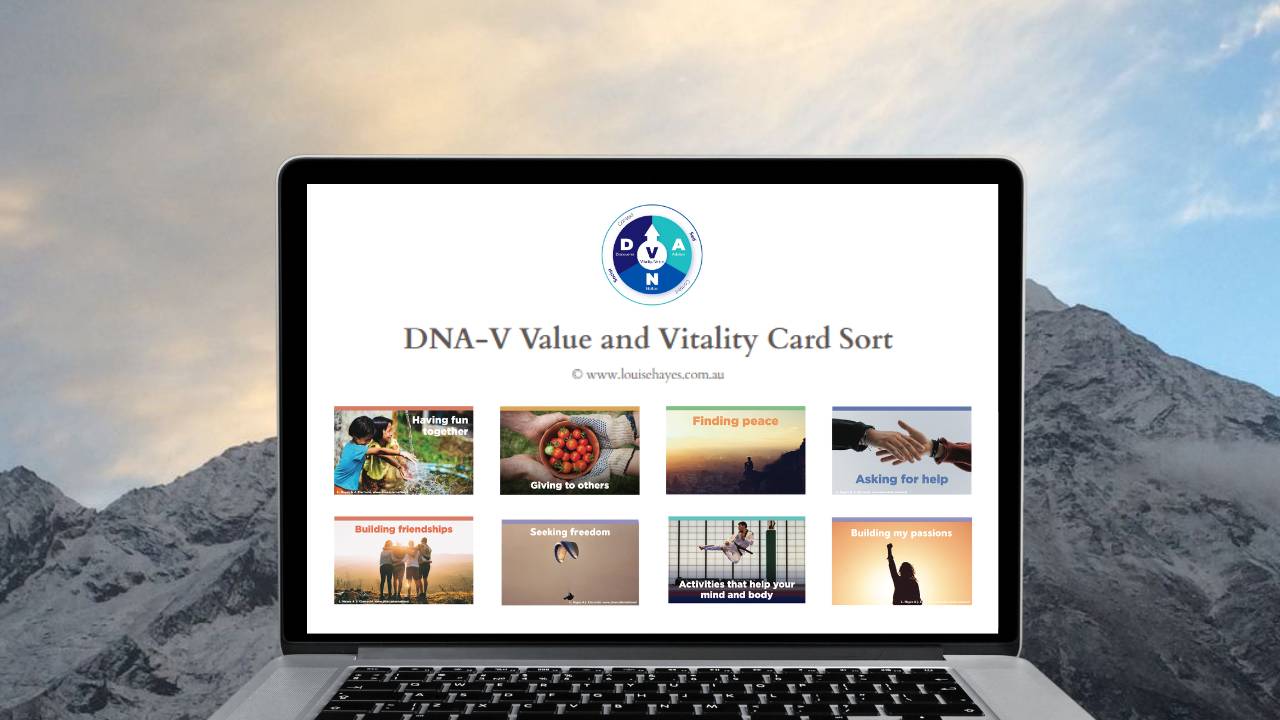
While there are many ways to explore values in therapy—through discussion, reflection, and various exercises—there's something uniquely powerful about using physical values cards. The tangible nature of holding, sorting, and choosing creates an embodied experience that brings abstract concepts...
Things you’re probably doing wrong… and how to fix them
Over many years I have travelled the world, training thousands of professionals who work in therapy and counselling for adolescents and adults, and I have noticed 3 common mistakes we tend to make.
It is easy to fall into the trap of ma...
Young people who've experienced trauma aren't broken—they've adapted.
Their responses often make sense within the context of their lives.
When we work holistically with young people, seeing their responses as hidden talents, we can begin to support profound changes.
Traditional therapy models ...
I've learned more by guiding health professionals into the Himalayas than in my thirty years of training and practice in psychology (well, sort of!).
In the Himalayas, our comforts are stripped away. The altitude makes one's head spin. The beds, sanitation, and cold stone rooms can be miserabl...
You're sitting across from a client who hasn't spoken for many minutes.
You get that sinking feeling in your chest, and your internal advisor ramps up with self-criticism:
"Am I doing something wrong?"
"Why can't I connect with them?"
“I bet this never happens to… [insert experienced therapist...
You’re sitting with a client, listening as they share their struggles.
They tell you about a conflict with their partner. A mistake at work. A worry that keeps them awake at night.
It's easy to get pulled into the details of their story. To focus on what happened, when, and why.
But what if t...
Welcome to a space where psychology meets compassion and growth. Each month, I'll share practical wisdom drawn from Acceptance and Commitment Therapy to help you navigate life's challenges with greater psychological flexibility and purpose.
What you'll receive:
Evidence-based strategies to build resilience and foster wellbeing
Thoughtful reflections on mindfulness and present-moment awareness
Practical tools to help you connect with your values and create a rich, meaningful life
Updates on workshops, speaking events, and new resources
Whether you're a mental health professional, a parent supporting a young person, or someone on your own journey of growth, this newsletter offers a gentle guide to living fully with both the joy and the struggle that life brings.
Together, we'll explore how to create space for difficult thoughts and feelings while moving toward what matters most to you.
Get Instant Access to Louise’s Past Newsletters
Sign up to receive Louise’s newsletter and unlock her previous editions full of insights, inspiration, and support.